In a series of email exchanges yesterday, my friend, colleague in ministry, and in many ways a model for life - Roy Lawson - made a comment that I think can be helpful to us during this time of "Stay in Shelter" routine we ought to be following.
Roy has been a preacher at great churches, a college professor, a college president, a seminary professor, and mission consultant for many years. He and his wife for the past few years might best be described as "world travelers impacting the kingdom in their travels." I first learned of him when I was in seminary and he spoke at an on-campus seminar of "reading and writing." At the time he was the pastor of a large church in Indianapolis. His topic that day was something along the lines of "what good preachers ought to be reading."
I can still remember the sense of relief I felt after listening to him speak about his own reading habits. His reading list was broad and included things like novels - modern and historic; biographies; historical fiction; studies in a variety of different academic topics; as well as things related to Scripture, theology, and the church. I didn't get any sense of some sort of artificial separation between "sacred" and "secular."
My sense of relief was rooted in the fact that I was beginning to read like Roy Lawson! Over the years we became friends through our common interest in Globalscope Campus Ministries and the kingdom of God in general. He grew up in the northwest. I grew up in the deep south. We both have dairy farms in our biographical details.
We both think alike about a variety of topics - tough ones included - which I think can only be the result of our mutual respect for learning, sacred and secular to use the terms so many love. We often share "have you read . . ." comments.
Despite living on the other side of the country and for much of the past few years traveling all over the world, Roy regularly checks on Vicki. It was in one of those emails to see how Vicki was doing that he said something that once again makes me grateful to call him friend.
Here's what he said: "it's really interesting to read Paul's letters, written while he's imprisoned and isolated and separated from his friends - while we're experiencing a hint of the same thing."
I love that he said "a hint of the same thing," and am not in the least that he said it that carefully. We aren't exactly spending our days in prison - and I hope that all of us are praying for those who literally are in prison and at great risk in over-crowded prisons. In Georgia, the extraordinarily poor health care for prisoners has been a front-page, multi-week issue for the Atlanta Journal Constitution long before the current crisis was even imagined. Our very conservative legislature seems unmoved by it all and we keep locking people up. So if you need something to put on your prayer list - this is a pretty good item to add!
But . . . we are "isolated" in ways that we aren't accustomed to. And that can be difficult. Just this morning a news story in metro-Atlanta was about a step-father who shot and killed his 16 year old stepson overnight. The news reporter included the challenge of staying mentally healthy when life as we have always known it seems to have been turned completely over.
Paul literally was in prison when he wrote what are often called the prison epistles. Those epistles include Ephesians, Philippians, Colossians, and Philemon. Particularly in Philippians 1 you can feel the tension between "when will this be over?" "how will this end?" and "is the ending 'life' or 'death/'"
That sounds a bit relevant. Georgia is currently in a bit of an uproar over those very questions and whether the governor made the right call or not.
I'm a regular Bible reader - daily - and am currently reading through the Torah. But I think I will add to that schedule reading through the Prison Epistles. I'm going to think about Paul's outlook, his attitude, his passion for the church and fellow believers, his "contentment" in whatever happens. I want to remember - he said these words from a prison in Rome (most likely) and managed to stay not only mentally fit, but spiritually fit as well.
If you're not a regular Bible reader, maybe this can be a great outcome from this time of isolation - that you become a regular reader of Scritpure.
If you are a regular reader of Scripture, then join with me in adding a passage from the Prison Epistles to your reading each day.
Once again, my good friend Roy Lawson has found a way to speak into my life in ways that make me stop and thank God for his friendship!
23 April 2020


22 April 2020
Earth Day 2020 - The 50th Anniversary
Today, 22 April 2020, is the 50th anniversary of Earth Day. This is a spot on our calendar where there is a global call to pay attention to the planet upon which we live. For some, it is little more than a selfish desire to make sure we have a safe place to live - today and into the future. For others, it may have no particular faith-related connotations, but is a kind of respect for creation that Paul seems to suggest as appropriate in Romans 1.
But for others - and I would include myself and lots of other believers - it is an opportunity to model the kind of behavior that the Creation accounts in Genesis 1 and 2 suggest appropriate for humans. Lots of English verbs get used in translating the Hebrew words into our language, but when all is said and done, it seems fair to say that God's intentional purpose at creation was that we humans - His image bearers to creation - were to care for, manage, use appropriately, be stewards of, and - well, just "take care of creation." The place where He was comfortable coming down in the cool of the evening for conversations with His image bearers.
A number of years ago I was a member of the Rotary Club in my town. One of our quarterly projects was to pick up litter on a two-mile stretch of the what might be viewed as "Main Street" though it was named something else. We would meet early on Saturdays, get brightly colored orange vests from the local police, and divide into teams and pick up litter. As a side note, one very properly Christian member of our club would never participate because, in his words, "Someone might think I was being punished for DUI because of those vests!"
One member of our club, I'll just call him Sam for the sake of privacy, always wanted to be my partner. Sam was one of those people who desperately wanted to have a good relationship with God, but never seemed to be able to pull it off. He had a PhD in forensic toxicology. He called me "Preacher," and I knew once a quarter, early on Saturday morning, wearing a vest that at least to one member made me look like a DUI guilty person, I would have a couple of hours of great theological conversations based on Sam's questions.
One morning, after picking up beer bottles galore, no-good lottery tickets, convenience story hot dog wrappers, and about any kind of trash you can think of, Sam said, "Preacher, I know who throws this stuff out."
I quickly replied, "Tell me who, and let's go talk to them. We could avoid these Saturday morning litter details."
He said, "No, I'm serious, I think I know."
I said, "Tell me."
He said, "It's those so-called Christians who go to the school board and complain about high school biology and evolution, but don't give a damn about taking care of what they say God made."
That was, for me, a stunning moment. I could put some names on the very people he was describing. It was a convicting moment. How could the very people who claim God created the heavens and the earth care so little about taking care of it?
Obviously not all believers fit that description. But if any believer fits that description, we who deeply believe God is creator should do our best to convince that person that if that is true, then together we image bearers of God in creation need to work to be good stewards.
We're obviously at a strange moment on this particular Earth Day. In some places, other than staying in place, about the only thing you can do is to go outside and marvel at creation.
So . . . on this 50th anniversary of Earth Day, why not go outside, take a slow, observant walk, and just marvel at the incredibly amazing way God made the Earth/Creation to function.
Remember, "the heavens declare the glory of God." Don't let my friend Sam's evaluation of why we litter to be true of you!
01 April 2020
I Can't Explain Him
It’s springtime in the south, and in a normal year our hot
topic might very well be tornadoes. It
seems as though every spring horrific tornadoes pop up when a cold front comes
rushing south to push down the “warmer than normal” temperatures. Inevitably we will see stories on the
national and local news outlets about destruction, death, and general mayhem left
in the wake of killer storms.
Tornadoes have odd patterns. Sometimes the video images we
see after the storm will have one house utterly destroyed and a house next door
seemingly untouched. How does that happen? A few weeks ago, my wife and I spent
a few days on Florida’s “forgotten coast” where Hurricane Michael hit as a
level four storm in October 2018. We could still see tons of damage. But what
was obvious was that in a variety of places many houses, businesses were
destroyed, while some survived nearly intact. How does that happen?
I suppose a good conversion with a well-educated
meteorologist could explain all kinds of principles from the world of weather,
maybe physics as well, that would help answer that question. It is also
possible that the smartest of the meteorologists might also say, “we don’t know
everything about how these storms work.”
While walking around the town of Port St. Joe on the
forgotten coast, I noticed that the beautiful, traditional looking First
Baptist Church was still unusable. The steeple was on the ground at the front
entrance and the roof of the sanctuary was on the floor. But a little further
down the street, less than a mile, the Methodist Church in Port St. Joe, right
on St. Joseph’s Bay, seemed to have suffered much less damage and was being
used regularly.
That isn’t unlike what you often hear on the news after a
tornado rumbles through a southern or mid-western neighborhood like a freight
train wreaking destruction all over the place. But you almost always see
destruction abutting no damage. In these cases, you often hear people declaring
“God saved my house, my possessions, my life . . .” But what about the people
next door? Did God not care about them? In the remarkable question the
disciples ask Jesus in John 9, “Rabbi, who sinned, this man or his parents,
that he was born blind?” (ESV)
Or in the case of First Baptist and First Methodist in Port
St. Joe – “did the Baptists sin worse since their church building’s damage was more
catastrophic?”
Or in the aftermath of Alabama tornadoes, “Did my next-door
neighbor sin worse because her house was destroyed and her children killed and
mine weren’t?”
The way it comes out far too often is “I’m so glad God
blessed me and my family,” while the next-door neighbor can only wonder about a
God who randomly blesses one family and ignores the other, right next door.
I’m not doubting God’s sovereignty over the world. I’m not
doubting the power of prayer. I’m not doubting my own need to pray – I pray
daily and often for lots of things, including the safety and blessing of God on
my wife and children. I’m not even
doubting that God has blessed and protected us in important ways over the
years. Specifically, right now I’m praying that God will help us avoid
Covid-19. But I’m confident that the pastor’s wife who died yesterday of what
seems to be Covid-19 was praying similarly to me.
The real question isn’t “can or does God bless us?” Rather
the real question is “how do I talk about the blessing of God without sounding
like the disciples who assumed ‘someone sinned’ in the case of the man born
blind?”. Or to put that another way, “Can I talk about God’s blessing without
sounding as though people who don’t experience this blessing must be sinners
with more tragic records than I have with God?”
To put this whole issue in current perspective, assuming I
am not afflicted with the corona-virus, don’t become ill with Covid-19, and
live to tell the story – how can I tell the story in a way that doesn’t make
people who have loved ones who can’t tell that story, even more frustrated with
God?
The problem is, as is true so often in theological thinking,
we allow our western, Enlightenment’s focus on individualism to become the
focus. When that happens, my prayers become more selfish, my testimony becomes
more ego-centric, and God becomes something like personal property. When my
prayers aren’t answered as I instructed God, I’m frustrated. When they are
answered as I instructed, “look how spiritual I am.”
I know this current cultural crisis won’t go on forever. (At
least I think I know that!) What I hope is that those of us who trust in God’s
providential care won’t talk about that care in ways that turn off others to
Him. But the more self-centered our comments will be, the more likely that will
be the outcome.
As a follower of Jesus, I am not so much called “to explain”
God as I am “to trust” God. If I can explain Him, of what need would I have of
Him? (See Romans 11:33-36)
That trust has convinced me (2 Timothy 1:12) that a day is
coming when He will, once and for all, make all things right. In my head,
Genesis 2 will be come our eternal story. In the meantime, life is going to be
impacted with the Genesis 3-11 story. But I can’t forget that the resurrection
of Jesus put some serious limits on the power of sin and death – the “strong
man” as been tied up. (Mark 3:27) So despite some “momentary and light
afflictions,” I anticipate an “eternal weight of glory beyond all comparison.”
(2 Corinthians 4:17)
Today I want to celebrate the good stuff and lament the
not-so-good stuff. I want to celebrate and lament in ways that point others to
God, not away from God.
The challenge is, how can we manage to do that?
I’m confident I don’t know the full answer to that question.
But my prayer about my own witness is that like the well-educated meteorologist
who likely would say “we don’t know everything about how tornadoes work,” I
will have the courage to say, “I don’t know everything about how God works.”
God save us from those who won’t say that!
27 March 2020
God is Great and Worthy to be Praised
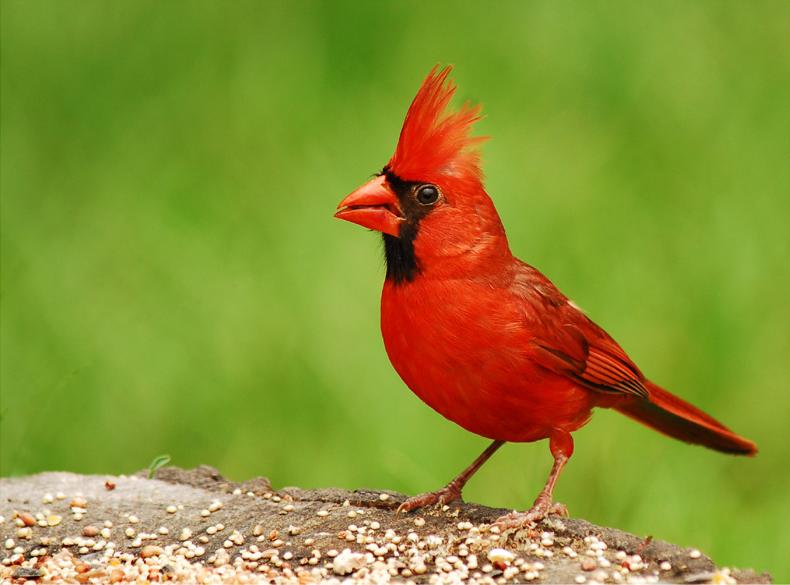
Almost everyone will recognize the beautiful red, male Cardinal pictured above. They are stunningly beautiful representatives of the glory of God's creation. Almost any time of any day, you can stand around my bird feeders and soon you will see beautiful, living examples of this bird, and the less brightly colored female partners.
Early this morning I was on a "phone call prayer meeting" of Point people. Someone was outside and the chorus of music being sung by birds was amazing. Earlier in the week, on Wednesday, I was with my friend Ron Lewis. We were videoing a conversation about Psalm 130 to be used for a virtual worship service on this coming Sunday, 29 March. When I listened to the recording - the birds were in the background praising God!
That got the "Wendel Berry in me" to thinking. What if each of us, early in the morning, listened to the birds? But not just listen, what if we picked out our favorite "phrase, or tune?" In our prayer meeting this morning, the birds were magnificent. If you happen to visit the Spring Road Christian Church virtual worship service this Sunday, you will hear a mighty chorus of God's creatures shouting out.
It is mid-day at my house. I just came inside. I've been listening. It is an incredible chorus of music going on right now.
In my personal Bible reading this morning, I finished a project of reading five psalms and one chapter of Proverbs per day. (Email me and I'll send you a plan!) Psalm 148 was among "the five psalms." Listen to some of its words:
Praise the Lord from the earth,
sea monsters and all deeps;
fire and hail, snow and clouds;
storm wind, fulfilling His word;
Mountains and all hills;
fruit trees and all cedars;
beasts and all cattle;
creeping things and winged fowl;
kings of the earth and all peoples;
princes and all jusges of the earth;
both young men and virgins; old men and children.
Let them praise the name of the Lord,
for his name aloen is exalted;
His glory is above earth and heaven."
Psalm 148:7-13
Did you see that phrase in bold print above? "And winged fowl." What if all that music I hear outside is in fact "praising the Lord?"
Here is a little spiritual exercise we can all do in these difficult times that might help us gain perspective. Pick a sound from the birds. Using your own creative language skills, interpret it to mean "God is great, and worthy to be praised." Don't worry about technicalities, you are creating the definitive dictionary for that particular bird language!
Now . . . every time you walk outside and hear one of God's creatures make that sound, just say "Amen! God is great and worthy to be praised." Psalm 148 declares "Praise the Lord from the earth . . ." and then goes to great length to describe how that happens - including "winged fowl."
Psalm 19 says, "The heavens are telling of the glory of God; and their expanse is declaring the work of His hands." (19:1) Psalm 24 proclaims "The earth is the Lord's and all it contains, the world, and those who dwell in it." Romans 8:19, in one of the best paragraphs Paul ever wrote, says "For the anxious longing of the creation waits eagerly for the revealing of the children of God."
In my growing up years, I don't think my home church ever missed a Sunday of singing "The Doxology." Here are its words:
Praise God from whom all blessings flow,
Praise Him all creatures here below.
Praise Him above the heavenly hosts,
Praise Father, Son, and Holy Ghost. Amen.
The "winged fowl" seem to have gotten that message pretty well. Maybe we need to join our voices with their voices and proliaim "God is great, and worthy to be praised."
By the way, the sound I have picked - no registered trademark on the choice - is the male Cardinal. It is so distinct. It sounds a bit like the English word "Cheer." Seems kind of appropriate for a Cardinal to be declaring "God is great and worthy to be praised!"
21 March 2020
Willow - Queen of the Sad Eyes
Earlier this week I went with my younger daughter, Bethany, to the emergency vet hospital in Fayetteville with her dog, and our granddog, Willow. She was pretty sick. The vets at the emergency hospital were hopeful, kind, and encouraging.
Later in the week I went with Bethany to her regular vet, Willow was most likely sick beyond recovery. I sat in the room as the vet, an extraordinarily kind and compassionate professional, and my daughter agreed that we were at the end of the struggle. Peacefully Willow left this world for the next world - a world that Scripture itself describes with remarkable ideas about the relationship between humans, created in the image of God, and all other creatures made by God
Willow was a rescue dog. Bethany,and her husband Chad, rescued Willow about ten years ago. She was a mix of who knows what - perhaps Jack Russell and something else - and snow-white in appearance. As the title of this post suggests - she was "queen of the sad eyes."
As a rescue dog, Willow wasn't fond of all humans, and especially humans who drove white cars. If you were outside with her and a white care passed by, you needed to make sure you had a firm grip on the leash. Someone in the past had clearly abused her, and they must have driven a white car.
Some would say, "She was just a dog." But I would say, even as a "dog" she modeled a sense of God's intentional purpose at creation that her first "owners" failed to model in significant ways. The biblical idea that humans are created in the image of God shouldn't make us think that all other creatures are merely at our disposal. If the truth be told, Willow modeled God's intentional purpose at creation in ways far better than the sub-human morons who first abused her.
Willow loved creation. She may be the only creature I've ever met who thought being outside was the greatest of gifts more than I do. Just say the world "let's go for a walk" and Willow was in high gear, ready to go. She adored looking outside, and being outside, and smelling outside.
During the winter months, I don't think I know a human who better enjoyed a fire in the fire place. In all honesty, the pleasure in Willow's eyes for a fire in the living room was more than worth the money I paid for the fire wood every winter.
Her heart, pancreas, who who knows what else finally gave out last weekend. She was our "grand dog" for about ten years. For about five of those ten years, she lived close by. She was, as the title suggests, "queen of the sad eyes." You just couldn't look at her and not realize that she saw stuff the rest of us ignore. But those sad eyes could quickly turn to eyes filled with joy and thanksgiving at being in the company of others who loved her.
Bethany and Chad chose well when they picked Willow to be a part of their family. Vicki and I, and "Aunt Sarah" were blessed by the sweet, loving, and penetrating eyes of Willow. While I would have rather been anywhere else in the world than in a vet's office as Willow's life ended - in great mercy and compassion - I wouldn't take anything for the blessing of having known her as one of my "grand dogs."
Creatures made by God are special. Just read the Bible for crying out loud. I hope one day to see Willow - along with other special creatures in my life - in an eternal, renewed and restored creation that measures up to what God intended in the first place.
Here's my favorite picture of Willow.

Thank you Lord, for making creatures like Willow. They bring blessings beyond measure if we just pay attention.
Later in the week I went with Bethany to her regular vet, Willow was most likely sick beyond recovery. I sat in the room as the vet, an extraordinarily kind and compassionate professional, and my daughter agreed that we were at the end of the struggle. Peacefully Willow left this world for the next world - a world that Scripture itself describes with remarkable ideas about the relationship between humans, created in the image of God, and all other creatures made by God
Willow was a rescue dog. Bethany,and her husband Chad, rescued Willow about ten years ago. She was a mix of who knows what - perhaps Jack Russell and something else - and snow-white in appearance. As the title of this post suggests - she was "queen of the sad eyes."
As a rescue dog, Willow wasn't fond of all humans, and especially humans who drove white cars. If you were outside with her and a white care passed by, you needed to make sure you had a firm grip on the leash. Someone in the past had clearly abused her, and they must have driven a white car.
Some would say, "She was just a dog." But I would say, even as a "dog" she modeled a sense of God's intentional purpose at creation that her first "owners" failed to model in significant ways. The biblical idea that humans are created in the image of God shouldn't make us think that all other creatures are merely at our disposal. If the truth be told, Willow modeled God's intentional purpose at creation in ways far better than the sub-human morons who first abused her.
Willow loved creation. She may be the only creature I've ever met who thought being outside was the greatest of gifts more than I do. Just say the world "let's go for a walk" and Willow was in high gear, ready to go. She adored looking outside, and being outside, and smelling outside.
During the winter months, I don't think I know a human who better enjoyed a fire in the fire place. In all honesty, the pleasure in Willow's eyes for a fire in the living room was more than worth the money I paid for the fire wood every winter.
Her heart, pancreas, who who knows what else finally gave out last weekend. She was our "grand dog" for about ten years. For about five of those ten years, she lived close by. She was, as the title suggests, "queen of the sad eyes." You just couldn't look at her and not realize that she saw stuff the rest of us ignore. But those sad eyes could quickly turn to eyes filled with joy and thanksgiving at being in the company of others who loved her.
Bethany and Chad chose well when they picked Willow to be a part of their family. Vicki and I, and "Aunt Sarah" were blessed by the sweet, loving, and penetrating eyes of Willow. While I would have rather been anywhere else in the world than in a vet's office as Willow's life ended - in great mercy and compassion - I wouldn't take anything for the blessing of having known her as one of my "grand dogs."
Creatures made by God are special. Just read the Bible for crying out loud. I hope one day to see Willow - along with other special creatures in my life - in an eternal, renewed and restored creation that measures up to what God intended in the first place.
Here's my favorite picture of Willow.
Thank you Lord, for making creatures like Willow. They bring blessings beyond measure if we just pay attention.
Subscribe to:
Posts (Atom)